Over-the-Air Updates: A Game Changer for Smart Devices
Ghayoor Zafar, Marketing Manager
- Published
- Feb 19, 2024
- Read Time
- 10 Min Read
Smart devices have revolutionized the way we live, offering convenience, automation, and connectivity like never before. But what if these devices could continuously improve and evolve without any effort on our part? That’s exactly what Over-the-Air (OTA) updates aim to achieve.
01 Advantages of over-the-air updates
Over-the-Air (OTA) updates have become a game changer in the world of smart devices. These updates bring numerous advantages that have transformed the user experience. Firstly, OTA updates allow for seamless and convenient updates without the need for manual intervention. Users no longer have to worry about connecting their devices to a computer or navigating a complex update process. Instead, updates can be delivered directly to the device, making the process hassle-free.
Secondly, OTA updates enable devices to continuously improve and enhance their functionality. Manufacturers can release new features, bug fixes, and security patches to their devices, ensuring that users always have access to the latest innovations. This not only keeps devices up-to-date but also extends their lifespan, as they can adapt to emerging technologies and advancements.
Lastly, OTA updates contribute to reducing costs for both manufacturers and users. Manufacturers can roll out updates to a large number of devices simultaneously, eliminating the need for expensive recall campaigns. Users, on the other hand, can enjoy the benefits of enhanced functionality without having to purchase new devices. This cost-effective approach ensures that smart devices remain relevant and competitive in the fast-paced tech industry.
02 OTA updates vs traditional updates
Traditional updates require users to manually download and install updates on their devices. This process can be time-consuming and inconvenient, especially for users with multiple devices.
On the other hand, OTA updates automate the update process, making it seamless and effortless for users. Devices can be set to automatically download and install updates, ensuring that users always have the latest software version without any extra effort.
Another key difference between OTA updates and traditional updates is the ability to deliver updates remotely. Traditional updates often require users to physically connect their devices to a computer or use removable storage to transfer the update files.
OTA updates, on the other hand, can be delivered wirelessly, allowing for updates to be sent directly to the device over the internet. This eliminates the need for physical connections and provides a more efficient and convenient update experience.
03 How over-the-air updates work
You can check out Sparkleo detailed tutorial post on OTA update for ESP32 using their flutter ota Package.
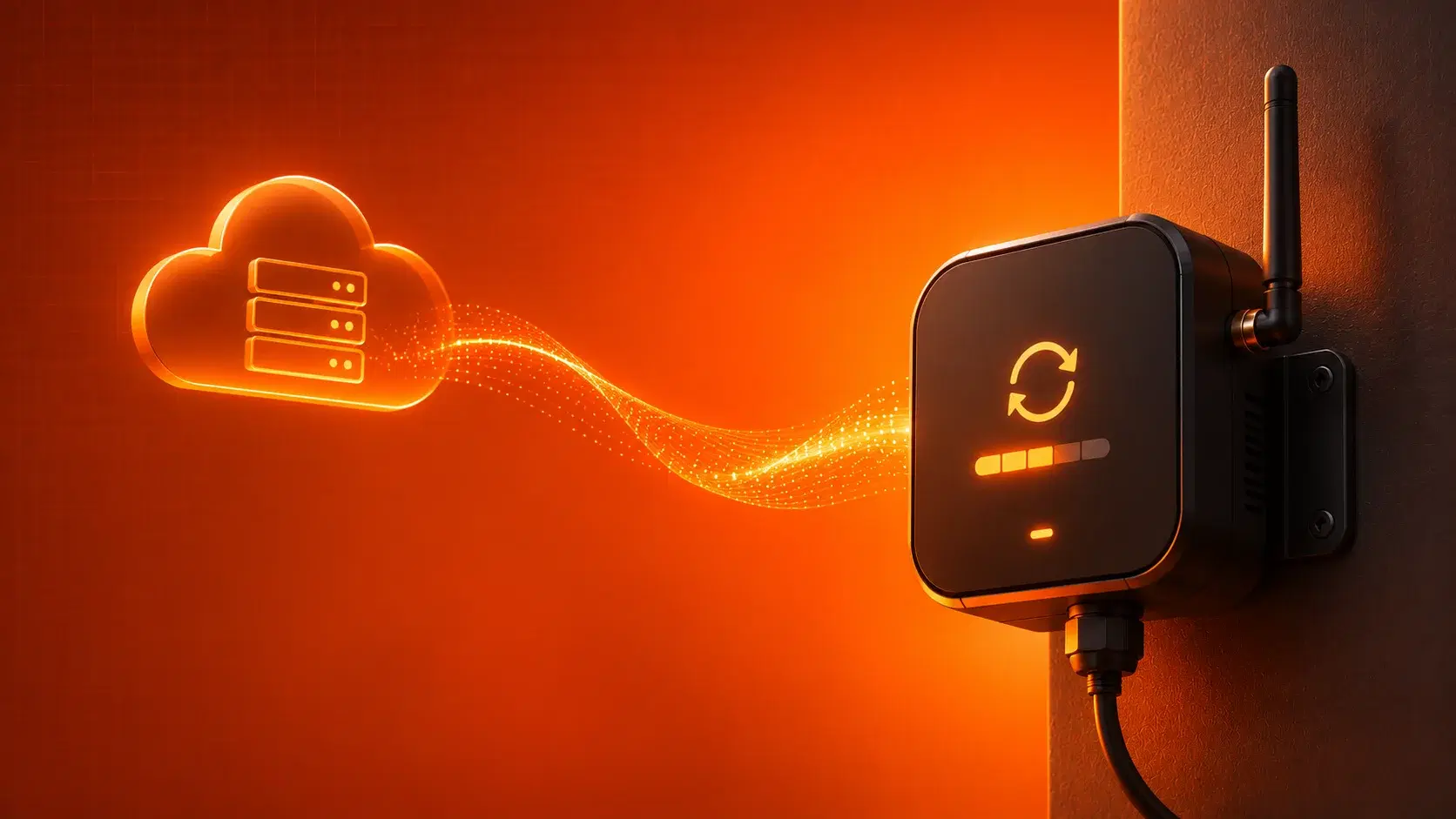
Over-the-Air (OTA) updates utilize wireless communication to deliver updates to smart devices. It involves a three-step process: checking for updates, downloading updates, and installing updates.
When a device checks for updates, it connects to a server or cloud platform to determine if there are any available updates. This can be triggered manually by the user or set to occur automatically at regular intervals. Once an update is found, the device proceeds to download the update files. This can be done using various wireless communication methods, such as Wi-Fi or cellular networks.
After the update files are downloaded, the device begins the installation process. This typically involves verifying the integrity of the update files, preparing the device for the update, and applying the update to the device’s software. The device may also restart or go through a reboot process to complete the installation.
Overall, the process of over-the-air updates simplifies the update experience for users, allowing them to effortlessly keep their devices up-to-date with the latest software enhancements.
04 Implementing OTA updates in smart devices
Implementing OTA updates in smart devices requires careful planning and consideration. Manufacturers need to ensure that their devices are capable of receiving and installing updates seamlessly. This involves designing devices with the necessary hardware and software components to support OTA updates.
One important aspect of implementing OTA updates is the ability to handle update failures or interruptions. Manufacturers need to implement mechanisms that can recover from failed or interrupted updates, ensuring that the device remains functional even in the event of an update error. This can include features such as rollback mechanisms or backup firmware images to restore the device to a working state.
Additionally, manufacturers must consider the scalability and efficiency of their OTA update infrastructure. As the number of smart devices in use continues to grow, the update process needs to be able to handle a large number of devices simultaneously. This requires robust and scalable server infrastructure to deliver updates efficiently to all devices.
05 Security considerations for OTA updates
Security is a critical aspect of OTA updates, as any vulnerabilities in the update process can potentially compromise the entire device ecosystem. Manufacturers must implement robust security measures to ensure the integrity and authenticity of their OTA updates.
One key security consideration is the use of secure communication protocols to transmit updates. Encryption protocols such as SSL/TLS can be used to secure the communication channel between the update server and the device, preventing unauthorized access or tampering of the update files.
Another important security measure is the use of digital signatures to verify the authenticity of the update files. Manufacturers can sign their update files with a private key, and devices can verify the signature using the corresponding public key. This ensures that only authorized updates from the manufacturer are installed on the device, protecting against malicious or tampered updates.
Manufacturers should also consider implementing secure boot mechanisms to ensure the integrity of the device’s firmware. This involves verifying the digital signature of the firmware during the boot process, preventing the device from booting if the signature is invalid or compromised.
By implementing robust security measures, manufacturers can ensure that OTA updates are delivered securely and that their devices remain protected against potential security threats.
06 Challenges of over-the-air updates
While over-the-air updates offer numerous benefits, they also come with their fair share of challenges. One of the main challenges is ensuring compatibility across different devices and software versions. Manufacturers must thoroughly test updates to ensure they are compatible with various hardware configurations and software versions. This can be a complex and time-consuming process, especially when dealing with a large number of devices and software combinations.
Another challenge is managing the bandwidth and data usage associated with OTA updates. Updates can be large in size, especially when introducing new features or significant changes. Manufacturers need to consider the impact of these updates on users’ data plans and ensure that updates are delivered efficiently to minimize data consumption.
Additionally, manufacturers must have robust fail-safe mechanisms in place to handle update failures or interruptions. If an update fails or is interrupted, the device must be able to recover and revert to a working state. This requires careful planning and implementation of rollback mechanisms to ensure that the user’s device remains functional even in the event of an update error.
07 Case studies of successful OTA updates
Several case studies highlight the success of OTA updates in improving smart devices’ functionality and user experience. One notable example is Tesla, the electric vehicle manufacturer. Tesla consistently releases OTA updates to its vehicles, introducing new features, performance enhancements, and even safety improvements. These updates have allowed Tesla to continuously improve its vehicles’ capabilities and provide an enhanced driving experience to its customers.
Another case study is Amazon’s Kindle e-readers. Amazon regularly releases OTA updates to its Kindle devices, bringing new features, improved battery life, and enhanced reading experiences. These updates have not only improved the devices’ functionality but also extended their lifespan, allowing users to enjoy the benefits of new technologies without having to purchase new devices.
08 Conclusion: The future of over-the-air updates for smart devices
Over-the-Air (OTA) updates have transformed the way we update and maintain our smart devices. With their numerous advantages, such as convenience, continuous improvement, and cost-effectiveness, OTA updates have become a game changer in the world of smart devices.
As the number of smart devices continues to grow, OTA updates will play an increasingly important role in keeping devices up-to-date and enhancing their functionality. Manufacturers will continue to invest in OTA update infrastructure and security measures to ensure that users can enjoy the benefits of the latest innovations effortlessly.
In conclusion, over-the-air updates have revolutionized the smart device industry, offering a seamless and convenient way to keep devices up-to-date and continuously improve their capabilities. With the promise of enhanced functionality, reduced costs, and improved user experience, the future of smart devices looks brighter than ever before.
09 Frequently asked questions about Over the air Updates
Q: Can OTA updates be disabled?
A: In most cases, OTA updates cannot be disabled completely, as they play a crucial role in keeping devices secure and up-to-date. However, users may have the option to delay or schedule updates according to their preferences.
Q: Do OTA updates consume a lot of data?
A: The data consumption of OTA updates can vary depending on the size of the update and the user’s data plan. Manufacturers strive to deliver updates efficiently to minimize data usage, but it’s always advisable to connect to a Wi-Fi network when performing OTA updates to avoid excessive data consumption.
Q: Are OTA updates secure?
A: OTA updates can be secure if manufacturers implement robust security measures. This includes using secure communication protocols, digital signatures, and secure boot mechanisms to ensure the integrity and authenticity of the update files.
Q: Can OTA updates be rolled back?
A: Depending on the implementation, some OTA updates can be rolled back if necessary. This allows devices to revert to a previous software version in case of issues or incompatibilities with the latest update.
Was This Article Helpful?